
Introduction
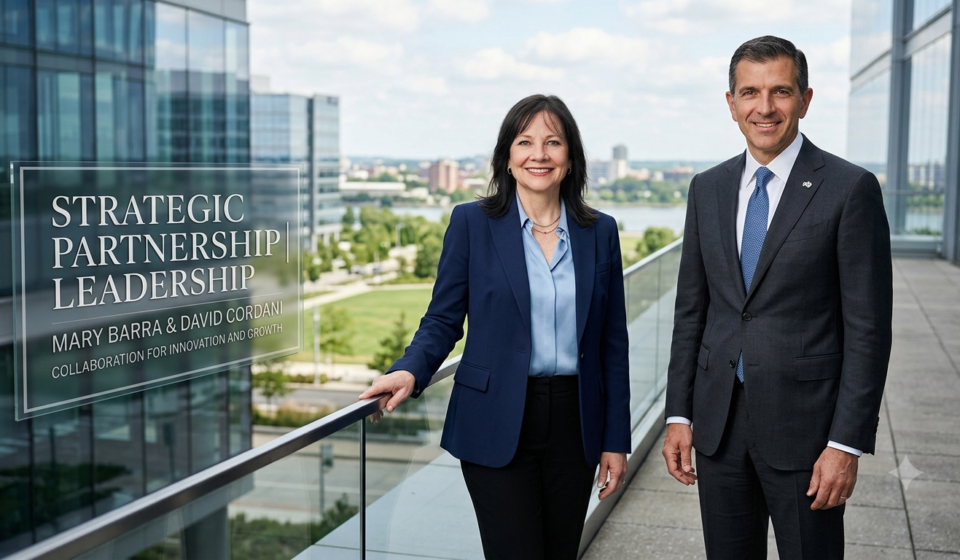
Mary Barra and David Cordani leadership provides an interesting look at how two major executives have guided large organizations through significant changes in their industries. Barra became CEO of General Motors (GM) in 2014 and has also served as chair since 2016, while Cordani led Cigna and The Cigna Group for many years before becoming executive chair after retiring as CEO on July 1, 2026. Their leadership approaches developed in very different industries, but both have emphasized organizational transformation, customer needs, culture, and long-term strategy.
The comparison between Mary Barra leadership style and David Cordani leadership style is useful because their organizations operate in very different environments. Barra has led an automotive company through major changes involving electrification, software, and autonomous-driving technology, while Cordani focused heavily on health services, affordability, customer experience, and changes within the healthcare system.
Who Is Mary Barra?
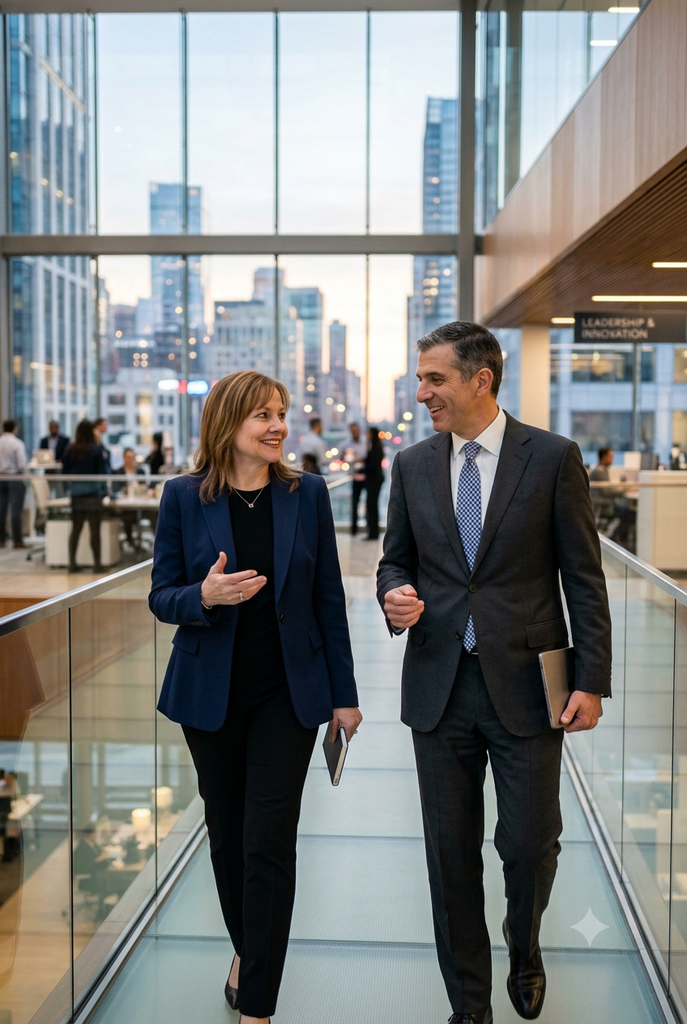
Mary Barra is the chair and chief executive officer of General Motors and has been CEO since 2014. Her career at GM began much earlier, in 1980, when she joined the company as a co-op student at the Pontiac Motor Division. Her professional background includes engineering, manufacturing, human resources, product development, purchasing, and supply chain responsibilities, giving her extensive experience across different areas of corporate leadership.
A major part of Mary Barra leadership has involved preparing GM for changes in the automotive industry. Under her leadership, GM has highlighted electric vehicles, software, and autonomous-driving technology as important parts of its future strategy. This illustrates an executive leadership approach centered on technological transformation while maintaining the company’s established automotive operations.
Who Is David Cordani?
David Cordani spent decades at Cigna and became president and CEO in 2009. He later served as chairman and CEO of The Cigna Group. In March 2026, the company announced that Cordani would retire as CEO effective July 1, 2026, with Brian Evanko succeeding him and Cordani moving into the role of executive chair.
David Cordani leadership has frequently emphasized healthcare transformation, customer experience, affordability, and broader health outcomes. In 2025, The Cigna Group announced a multi-year effort focused on improving customer experiences and healthcare value, with accountability and measurable actions forming important parts of the initiative.
Mary Barra and David Cordani Leadership: Key Similarities
Although Mary Barra and David Cordani worked in different industries, their leadership approaches share several themes. Both executives have had to manage large organizations during periods of technological, economic, and industry change. Their corporate leadership also shows the importance of connecting long-term strategy with changes affecting customers and employees.
1. Focus on Long-Term Transformation
Mary Barra and David Cordani leadership both demonstrate an emphasis on organizational transformation rather than relying only on existing business models. At GM, Barra has promoted electrification, software, and autonomous driving as part of the company’s transformation. At The Cigna Group, Cordani promoted changes intended to improve healthcare experiences and create a more sustainable healthcare model.
This type of transformational leadership requires executives to balance current operations with future opportunities. For Barra, that means managing the traditional automotive business while investing in emerging technologies. For Cordani, the challenge involved responding to healthcare costs, customer expectations, and changing models of care.
2. Customer-Centered Leadership
Customer-focused leadership is another important theme in the Mary Barra and David Cordani leadership comparison. GM describes Barra’s strategy around delivering vehicles customers want while developing technologies that can change transportation.
Cordani’s leadership approach similarly placed customers and patients at the center of healthcare transformation. The Cigna Group’s initiatives have included efforts to improve customer experiences, increase transparency, and provide greater value.
3. Culture and Organizational Behavior
Mary Barra leadership style has also placed considerable attention on organizational culture. In an interview with Harvard Business Review, Barra discussed how GM worked on culture by defining values and focusing on everyday behaviors rather than simply writing values on paper. She described customer focus, stakeholder relationships, and excellence as important elements of the culture work.
David Cordani leadership has likewise been associated with values such as integrity, trust, and responsibility. The Cigna Group’s leadership materials in 2026 highlighted Cordani’s reflections on leadership, trust, integrity, and the lessons he developed during nearly two decades of leading the organization.
How Mary Barra’s Leadership Differs
Mary Barra leadership is strongly connected to engineering, manufacturing, product development, and technological change. Her career within GM gave her experience across multiple operational areas before she became CEO. That background is relevant to her approach to automotive transformation because GM’s strategy involves complex products, manufacturing systems, software, and global supply chains.
Innovation is therefore a major part of Barra’s executive leadership profile. GM has publicly emphasized electrification and other technologies as part of its future, while also continuing to operate a large conventional automotive business. This creates a leadership environment where investment decisions, manufacturing capabilities, technology development, and customer demand all have to be considered together.
How David Cordani’s Leadership Differs
David Cordani leadership developed within the healthcare and health-services sector, where business decisions can directly affect access, affordability, patient experiences, and health outcomes. His leadership therefore placed significant attention on healthcare transformation and the relationship between business performance and the needs of customers and patients.
During his tenure, The Cigna Group described initiatives aimed at improving healthcare experiences and addressing systemic challenges. In 2025, Cordani said the company wanted to pursue tangible actions to improve health outcomes and healthcare experiences while developing a more sustainable model.
Mary Barra and David Cordani Leadership in Times of Change
One useful lesson from Mary Barra and David Cordani leadership is the importance of managing change while maintaining organizational continuity. Barra has led GM during an automotive transformation involving electric vehicles, software, and changing expectations about transportation. GM has also stated its goal of becoming carbon neutral in its global products and operations by 2040.
Cordani’s leadership provides a different example of change management. After nearly 17 years as CEO, his transition was planned with Brian Evanko taking over as CEO and Cordani moving to executive chair. The Cigna Group described the transition as intentional and disciplined, designed to maintain strategic momentum.
What Can Businesses Learn From Their Leadership Approaches?
The comparison of Mary Barra and David Cordani leadership offers several practical lessons for business leaders. First, long-term strategy needs to be connected to real changes in the market. Barra’s focus on emerging automotive technologies demonstrates the importance of preparing for industry transformation, while Cordani’s healthcare strategy shows the importance of responding to changing customer and system-level needs.
Second, organizational culture matters to effective business leadership. Barra’s comments about changing everyday behaviors at GM illustrate how culture can be connected to practical actions rather than treated only as a corporate statement. Cordani’s emphasis on trust and integrity similarly demonstrates the role of leadership values in large organizations.
Third, successful executive leadership requires succession planning. The 2026 transition from Cordani to Brian Evanko demonstrates how leadership succession can be planned before a CEO leaves the position.
Frequently Asked Questions
What is Mary Barra’s leadership style?
Mary Barra’s leadership style can be described through her emphasis on culture, customer focus, technological transformation, and organizational change. Her engineering and operational background also contributes to her approach to managing GM’s complex automotive business.
What is David Cordani’s leadership style?
David Cordani leadership has emphasized healthcare transformation, customer and patient needs, trust, integrity, and long-term organizational strategy. The Cigna Group’s leadership materials have highlighted his reflections on trust and leadership as he moved toward his role as executive chair.
What do Mary Barra and David Cordani have in common?
Mary Barra and David Cordani both led large organizations through periods of significant industry change. Their leadership strategies have included customer focus, organizational transformation, culture, and long-term planning, although their specific industries and business challenges are very different.
How has Mary Barra changed GM’s strategy?
Mary Barra has overseen a period in which GM has emphasized electric vehicles, software, autonomous-driving technology, and a broader transformation of transportation. GM has also announced a goal of carbon neutrality in its global products and operations by 2040.
How long was David Cordani CEO of Cigna?
David Cordani became president and CEO of Cigna in 2009 and remained CEO through June 30, 2026. He became executive chair on July 1, 2026, while Brian Evanko succeeded him as CEO.
Why is leadership comparison useful?
Comparing Mary Barra and David Cordani leadership helps illustrate how executive leadership can take different forms depending on the industry. Automotive leadership may require strong attention to engineering and technological transformation, while healthcare leadership involves additional considerations around affordability, customer experience, health outcomes, and system-wide change.
Conclusion
Mary Barra and David Cordani leadership provides two distinct examples of modern corporate leadership. Barra’s career at General Motors and focus on automotive transformation demonstrate an approach closely connected to technology, engineering, culture, and long-term mobility trends. Cordani’s career at Cigna and The Cigna Group demonstrates a leadership approach centered on healthcare transformation, customer needs, trust, and organizational continuity.
The broader lesson from their executive leadership experiences is that leadership strategies are shaped by the challenges an organization faces. Whether the challenge is automotive technology or healthcare transformation, effective corporate leadership involves setting a clear direction, developing organizational capabilities, responding to customers, and preparing the organization for future change.