
How Could Neuralink’s Brain-Computer Technology Help Create New Possibilities for Human Health, Accessibility, and Digital Interaction?

Technology has changed almost every part of modern life, from the way people communicate to how doctors treat patients. Computers, smartphones, artificial intelligence, and connected devices have made many tasks faster and easier. However, most digital technology still depends on physical actions such as typing, touching a screen, speaking, or moving a mouse.
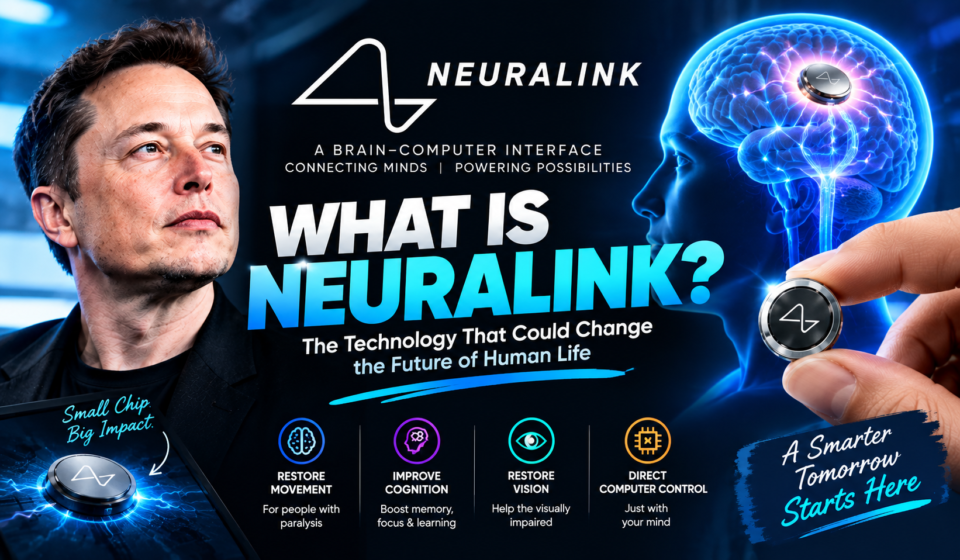
Neuralink is working on a different approach. The company is developing brain-computer interface technology designed to create a direct communication pathway between brain activity and computers. The idea is to allow certain brain signals to be translated into digital commands.
This technology is still developing, and many of its potential applications require extensive research, testing, and regulatory approval. However, brain-computer interfaces could eventually create new possibilities in healthcare, accessibility, communication, and human-computer interaction.
What Is Neuralink?
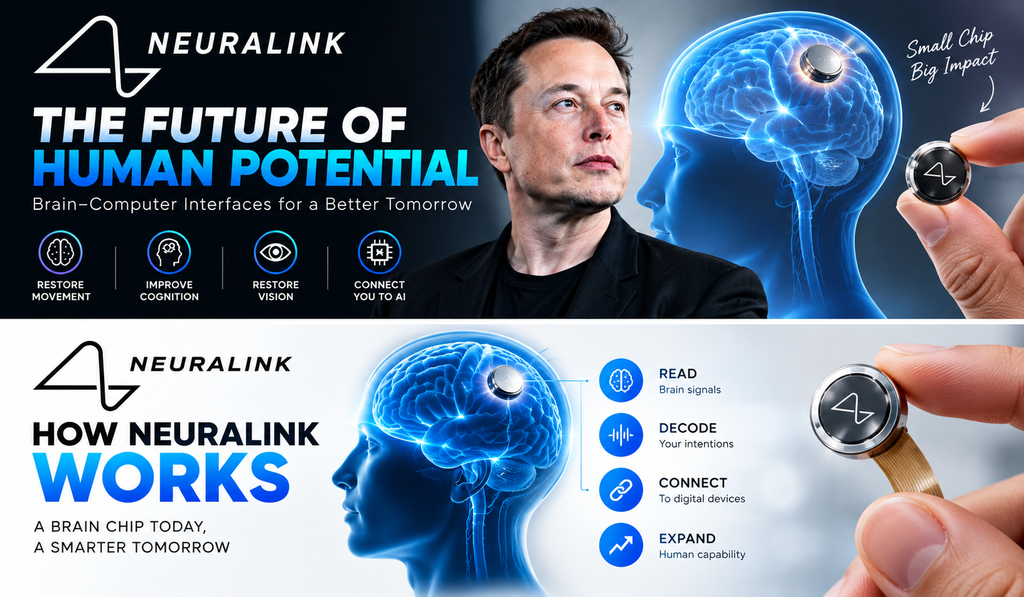
Neuralink is a neurotechnology company focused on developing brain-computer interfaces, often called BCIs. A BCI is a system that can detect certain signals from the brain and translate them into commands that a computer or another device can understand.
The concept is not completely new. Researchers have studied brain-computer interfaces for many years. What makes Neuralink notable is its effort to develop a small implanted device and supporting technology intended to make brain-computer interaction more practical.
The technology involves tiny electrode-containing threads designed to detect neural activity. A specialized device processes the signals and communicates with external technology.
The long-term goal is ambitious: create a system that can allow people to interact with computers through brain signals rather than relying entirely on traditional physical controls.
How Could Brain-Computer Technology Help Human Health?
One of the most important potential applications of brain-computer interfaces is healthcare.
Some people experience conditions that affect their ability to move, communicate, or control traditional digital devices. In such situations, technology that can interpret certain brain signals may offer another method of interaction.
For example, a person who cannot easily use a keyboard or touchscreen could potentially use a BCI to control a computer interface. The person would not necessarily need to make large physical movements. Instead, the system could interpret specific neural activity associated with intended actions.
This could support new forms of assistive technology.
It is important to understand that these possibilities are still areas of research. A brain-computer interface is not a universal treatment for neurological conditions, and its effectiveness can vary depending on the individual and the technology involved.
Could Neuralink Improve Accessibility?
Accessibility is another area where brain-computer interfaces could have a major impact.
Digital devices are designed around common forms of physical interaction. People who have severe movement limitations may find keyboards, mice, controllers, or touchscreens difficult or impossible to use independently.
A BCI could potentially provide another pathway.
Imagine someone being able to control a computer cursor through intended movement detected from brain activity. Such a system could potentially help the person communicate, access information, operate software, or perform other digital tasks.
For people who have lost certain physical abilities, even basic digital independence can be extremely valuable.
The broader idea is not simply about controlling a computer. It is about giving people more ways to interact with the world around them.
How Could Neuralink Change Digital Interaction?
Today’s digital interaction usually requires a physical interface.
People type words, click buttons, swipe screens, move controllers, and speak commands. Brain-computer interfaces could eventually add another layer to this interaction by allowing computers to respond to signals generated by the brain.
This could make some forms of digital interaction more direct.
For example, instead of physically moving a mouse, a user might eventually be able to control a cursor through detected neural activity. Similarly, researchers are exploring ways BCIs could support communication and control of assistive devices.
However, this does not mean that traditional interfaces will disappear. Brain-computer technology is more likely to become an additional interaction method for specific use cases, particularly where conventional controls are difficult.
Why Is Neural Signal Interpretation Difficult?
The human brain is extremely complex. It contains billions of neurons that communicate through electrical and chemical activity.
A BCI needs to detect useful patterns within this complicated activity. The system then has to process those signals and convert them into commands that a computer can understand.
This is technically challenging.
Brain signals can vary between individuals and can also change over time. A system therefore needs sophisticated signal processing and machine-learning techniques to interpret the information accurately.
The quality of the signal is also important. The technology needs to distinguish meaningful neural patterns from background activity.
For this reason, developing a reliable BCI requires significant engineering, neuroscience research, testing, and refinement.
Could Brain-Computer Interfaces Help Communication?
Communication is one of the most interesting potential applications of BCI technology.
People who cannot communicate easily through speech or physical movement may benefit from alternative communication systems. A brain-computer interface could potentially help translate certain intended actions into digital selections.
For example, a user could potentially select letters, words, symbols, or commands through a computer interface.
Over time, improved technology could make such systems faster and more natural.
The goal would not necessarily be to read every thought a person has. Instead, a practical system would focus on specific signals that can be reliably associated with intended actions.
This distinction is important because brain-computer interfaces are often misunderstood as technology that can simply “read minds.” Current BCI technology does not work like that.
What Could the Future of Human-Computer Interaction Look Like?
The future of human-computer interaction could include many different types of interfaces.
Voice assistants allow people to communicate with software using speech. Touchscreens allow direct interaction with visual interfaces. Wearable devices monitor physical signals. Brain-computer interfaces could potentially add another method based on neural activity.
This could create a more flexible technology ecosystem.
A person might use a traditional keyboard for writing, voice commands for certain tasks, and a BCI for specific accessibility functions.
The most useful technology will likely be technology that solves a real problem rather than simply being new.
For this reason, medical and accessibility applications may remain especially important as brain-computer interfaces continue to develop.
What Are the Challenges and Risks?
Despite the potential benefits, brain-computer technology also creates serious challenges.
One major concern is safety. Implanting a device in the human body requires medical procedures and careful monitoring. Researchers must evaluate potential risks associated with surgery, the implant, long-term use, and device performance.
Data privacy is another important issue.
Brain-computer interfaces deal with highly sensitive biological information. Questions about who can access neural data, how it is stored, how it is protected, and how it can be used will become increasingly important as the technology develops.
There are also ethical questions.
People need to understand what an implanted device can and cannot do. Researchers and companies must communicate capabilities honestly and avoid creating unrealistic expectations.
Regulation and medical oversight will therefore remain important parts of the technology’s development.
Could Neuralink Make Technology More Inclusive?
One of the strongest arguments for brain-computer interfaces is their potential to make digital technology accessible to people who currently face physical barriers.
Accessibility is not only about convenience. For many people, access to computers and communication tools can affect education, employment, independence, and social connection.
If future BCIs become reliable and practical, they could potentially give some users greater control over digital devices.
This could include interacting with computers, assistive technologies, communication systems, and other connected devices.
However, accessibility solutions should remain affordable and widely available. Advanced technology has limited social value if only a small number of people can access it.
What Role Could Artificial Intelligence Play?
Artificial intelligence and machine learning could become important components of future brain-computer interfaces.
Neural signals can be complex, and machine-learning models can help identify patterns within large amounts of signal data.
For example, software may learn how particular neural patterns correspond to intended digital actions. Over time, the system could potentially become better at interpreting those signals.
AI could therefore help create more responsive and personalized interfaces.
At the same time, using AI with neural data increases the importance of privacy, security, transparency, and responsible data management.
The combination of neuroscience and AI could be powerful, but it needs to be developed carefully.
FAQS
What is Neuralink mainly trying to achieve?
Neuralink is developing brain-computer interface technology intended to create a communication pathway between neural activity and computers. One major area of interest is helping people interact with digital systems through brain signals.
Could Neuralink help people with physical disabilities?
Brain-computer interfaces have potential as assistive technology for people with certain physical limitations. They may eventually help some users interact with computers or other devices when traditional physical controls are difficult to use. However, specific benefits depend on the technology, medical condition, and individual user.
Can Neuralink read a person’s thoughts?
It is misleading to describe current brain-computer interfaces as simply reading people’s thoughts. BCI systems are designed to detect and interpret particular neural signals or patterns for specific tasks. The technology is much more limited and task-focused than science-fiction-style mind reading.
Is Neuralink technology available for everyone?
No. Neuralink’s technology is not a general consumer product available to everyone. Brain implants involve medical considerations, research requirements, and regulatory processes. Broader availability would depend on safety, effectiveness, approvals, and future development.
What is the future potential of brain-computer interfaces?
The potential is broad. Future BCIs could support assistive communication, computer control, accessibility, and other medical applications. They may also influence how humans interact with digital technology. However, many potential applications remain under research and should not be treated as guaranteed future capabilities.
Final Thoughts
Neuralink represents one part of a much larger effort to develop better connections between the human brain and digital technology. Brain-computer interfaces could eventually provide new ways for people to communicate, control computers, and interact with assistive devices.
The most meaningful impact may come from healthcare and accessibility. For people who face significant physical barriers when using conventional technology, a reliable BCI could provide a valuable alternative.
At the same time, the technology comes with major challenges involving safety, privacy, ethics, cost, reliability, and regulation. These issues cannot be ignored simply because the technology is exciting.
The future of brain-computer interfaces will depend on careful scientific research and responsible development. If researchers can improve reliability and safety while protecting users’ privacy and autonomy, BCIs could become an important part of future assistive and digital technology.
Neuralink’s work has therefore attracted attention not only because of its futuristic possibilities, but also because it raises an important question: What could happen when technology becomes capable of responding more directly to the signals produced by the human brain?