

What Is a Prayer Plant?
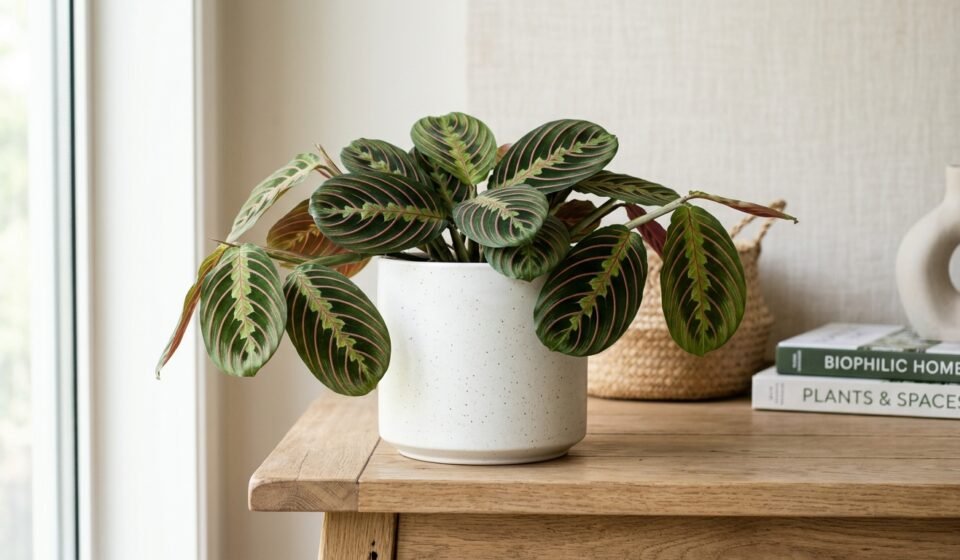
A prayer plant is a tropical houseplant from the Maranta genus, best known for its beautifully patterned leaves and unusual movement. One of the most popular species is Maranta leuconeura, which has oval leaves decorated with contrasting green, silver, or red markings.
The plant gets its common name from the way its leaves move upward in darkness, creating an appearance similar to hands folded in prayer. During daylight, the leaves generally spread out again.
Prayer plants are popular indoor plants because their colorful foliage can brighten a room without requiring harsh direct sunlight. They naturally grow in tropical environments, so successful indoor care depends on providing filtered light, consistent moisture, warmth, and good humidity.
Why Is the Prayer Plant Popular as a Houseplant?
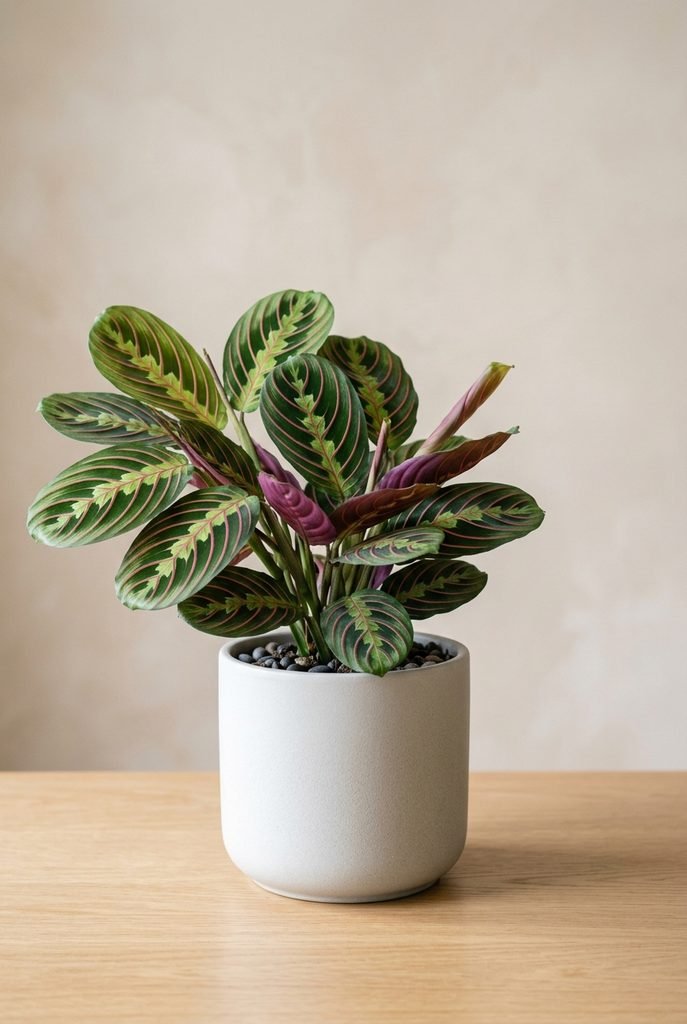
The main attraction of a prayer plant is its foliage rather than its flowers. Depending on the variety, leaves can feature attractive patterns, red veins, silver markings, or darker green areas.
The plant also has a relatively compact growth habit. The Royal Horticultural Society describes Maranta leuconeura as an evergreen, rhizomatous, clump-forming perennial that can reach roughly 0.1–0.5 meters in height and spread.
Its ability to tolerate lower light than many sun-loving houseplants also makes it useful for rooms where bright direct sunlight is unavailable.
How Do You Care for a Prayer Plant?
The basic requirements for a healthy prayer plant are straightforward:
- Bright, indirect or filtered light
- Evenly moist but well-drained soil
- Good humidity
- Warm, stable conditions
- Protection from harsh direct sunlight
- A container with proper drainage
- Moderate feeding during active growth
The biggest challenge is finding the right balance. The soil should not become bone dry for long periods, but constantly waterlogged soil can also cause problems. Illinois Extension recommends keeping the soil moist while avoiding standing water around the plant crown.
What Light Does a Prayer Plant Need?
A prayer plant prefers bright, indirect light rather than strong direct sunlight.
An ideal location might be near a bright window where sunlight is filtered through a sheer curtain. Direct, intense sunlight can damage or fade the attractive leaf patterns. North Carolina Extension notes that excessive sunlight can bleach the plant’s foliage, while the plant can tolerate low to medium light.
If your prayer plant receives too little light, growth may become slower and the attractive leaf coloration can become less pronounced.
A useful approach is to observe the leaves and growth rather than relying on a fixed number of hours of sunlight.
How Often Should You Water a Prayer Plant?
How often should you water a prayer plant?
There is no single watering schedule that works for every home because temperature, humidity, pot size, soil, and light all affect how quickly the soil dries.
Instead of watering according to a strict calendar, check the soil regularly. During active growth, the goal is to keep the growing medium consistently moist without leaving the roots sitting in water.
Illinois Extension recommends keeping the soil moist and allowing it to dry somewhat between waterings during winter.
When watering:
- Check the soil before adding more water.
- Water thoroughly when needed.
- Make sure excess water can drain away.
- Do not allow water to remain around the plant crown.
- Reduce watering when growth slows in winter.
Overwatering is particularly problematic because constantly wet conditions can contribute to root problems.
What Humidity Does a Prayer Plant Need?
Does a prayer plant need high humidity?
Yes. Prayer plants naturally come from tropical environments and generally perform better in humid indoor conditions.
The RHS recommends maintaining high humidity for Maranta leuconeura, while Illinois Extension also lists high humidity among its special requirements.
If your indoor air is dry, you can increase humidity by:
- Using a humidifier
- Grouping several plants together
- Growing the plant in a naturally humid room
- Placing the pot near a suitable humidity tray
However, increasing humidity should not mean keeping the soil constantly saturated. Air circulation and proper drainage remain important.
What Soil Is Best for a Prayer Plant?
A prayer plant needs a growing medium that retains some moisture while still draining effectively.
A quality indoor potting mix can work well when it does not remain soggy after watering. The RHS recommends peat-free compost for growing Maranta under glass and describes the plant as preferring moist but well-drained conditions.
Good drainage is particularly important because the plant’s roots should have access to moisture without sitting in stagnant water.
A container with drainage holes is therefore much safer than a decorative pot with no drainage.
Why Are My Prayer Plant Leaves Curling?
Why are prayer plant leaves curling?
Curling leaves can be a sign that the plant is experiencing unfavorable growing conditions. Possible causes include insufficient moisture, low humidity, excessive direct sunlight, cold conditions, or other environmental stress.
North Carolina Extension notes that prayer plants are intolerant of low humidity, direct sunlight, low temperatures, and cold drafts.
If you notice curling leaves, check the plant’s environment first:
- Feel the soil to determine whether it has become excessively dry.
- Check whether the plant is receiving harsh direct sunlight.
- Look for cold drafts from windows or air conditioning.
- Consider whether the surrounding air is very dry.
- Inspect the leaves for signs of pests.
Avoid changing several conditions dramatically at once. Making gradual adjustments makes it easier to identify what is helping.
Why Are My Prayer Plant Leaves Turning Brown?
Brown or crispy leaf edges can occur when environmental conditions are not suitable.
Low humidity and inconsistent moisture are common concerns with tropical foliage plants. Direct sunlight can also damage delicate leaves.
Start by checking the soil and location. If the soil is extremely dry, correct the watering routine. If the room is very dry, consider increasing humidity. If the plant receives strong direct sunlight, move it to a location with filtered or indirect light.
It is also important not to overcorrect by keeping the soil permanently wet.
Why Are Prayer Plant Leaves Turning Yellow?
Why are prayer plant leaves turning yellow?
Yellow leaves can have several possible causes, so the surrounding conditions should be examined rather than assuming one problem.
Overwatering is an important possibility, especially when the soil remains wet for extended periods. Poor drainage can make the situation worse.
Check:
- How frequently you water
- Whether the pot has drainage holes
- Whether water collects in the saucer
- How quickly the soil dries
- The amount of available light
- Whether the plant shows signs of pests
Removing badly damaged leaves can improve the plant’s appearance, but correcting the underlying growing conditions is more important.
How Do You Propagate a Prayer Plant?
How do you propagate a prayer plant?
Prayer plants can be propagated through division, and the RHS also lists basal cuttings and seed as propagation methods.
Division is a practical option for an established plant.
When dividing a prayer plant, carefully separate portions of the plant so that each division has suitable roots and growing points. Place the divisions into appropriate containers with well-drained growing medium and maintain suitable moisture and humidity while they establish.
Because prayer plants grow from rhizomes and form clumps, division fits naturally with their growth habit.
Does a Prayer Plant Need Fertilizer?
A prayer plant can benefit from feeding during active growth, but excessive fertilizer is not helpful.
The RHS recommends feeding Maranta leuconeura monthly under cultivation and reducing watering during winter.
Follow the instructions on the fertilizer product you use rather than applying a stronger mixture than recommended. North Carolina Extension also notes that over-fertilization can contribute to leaf damage.
When Should You Repot a Prayer Plant?
A prayer plant does not necessarily need frequent repotting. Consider repotting when the plant has substantially outgrown its container, the growing medium has deteriorated, or the roots have become crowded.
Choose a pot with drainage and avoid moving the plant into a dramatically oversized container. A very large volume of wet soil can take longer to dry, increasing the risk of excessive moisture around the roots.
Because prayer plants have a relatively shallow root system, shallow containers can also be appropriate.
Common Prayer Plant Problems
| Problem | Possible Cause | What to Check |
|---|---|---|
| Curling leaves | Dry soil, low humidity, stress | Moisture and humidity |
| Brown edges | Dry conditions or harsh light | Humidity and window exposure |
| Yellow leaves | Excess moisture or other stress | Soil drainage and watering |
| Faded leaves | Too much direct light | Move to filtered light |
| Slow growth | Low light or unsuitable conditions | Light, moisture and feeding |
| Root problems | Waterlogged soil | Drainage and watering habits |
| Pests | Indoor growing conditions | Inspect leaves and stems |
Prayer plants can be susceptible to pests such as mealybugs and spider mites, according to the RHS.
Regularly inspecting both sides of the leaves can help you notice problems before they become severe.
Is a Prayer Plant Difficult to Grow?
A prayer plant is not necessarily difficult, but it is less forgiving of poor environmental conditions than some extremely hardy houseplants.
The key is consistency. Rather than allowing the soil to become extremely dry and then soaking the plant, aim for steady moisture. Likewise, avoid placing the plant in harsh afternoon sunlight or next to a cold draft.
Once you find a suitable location with indirect light and adequate humidity, the plant can become a rewarding addition to an indoor plant collection.
Can Prayer Plants Grow in Low Light?
Can prayer plants grow in low light?
Prayer plants can tolerate lower light conditions, but they generally perform better with bright, filtered or indirect light. North Carolina Extension describes them as tolerant of low to medium light while warning that direct sunlight can damage their foliage.
If a room is particularly dark, growth may become slower and the foliage may lose some of its strongest coloration.
FAQS
What is the scientific name of a prayer plant?
One widely grown prayer plant is Maranta leuconeura, a member of the Marantaceae family.
Why is it called a prayer plant?
The name comes from the plant’s leaves moving upward at night, creating a visual impression of folded praying hands.
Can prayer plants grow indoors?
Yes. Prayer plants are commonly grown as houseplants and are particularly suited to warm indoor environments with filtered light and adequate humidity.
Should prayer plants be in direct sunlight?
Generally, no. Bright indirect or filtered light is preferable. Strong direct sunlight can fade or damage the foliage.
How do you keep a prayer plant healthy?
Provide bright indirect light, consistent moisture, good drainage, warmth, and high humidity. Avoid waterlogged soil, harsh direct sunlight, and cold drafts.
Can you propagate a prayer plant?
Yes. Division is one of the established propagation methods for Maranta, with basal cuttings also possible.
Conclusion
A prayer plant can bring striking tropical foliage and interesting natural movement into an indoor space. Maranta leuconeura is particularly valued for its patterned leaves and ability to grow in filtered light.
The most important parts of prayer plant care are consistent moisture, good drainage, indirect light, warmth, and adequate humidity. Avoid harsh direct sunlight and do not allow the roots to remain in standing water.
With the right environment and regular observation, a prayer plant can remain an attractive and rewarding houseplant for years.