
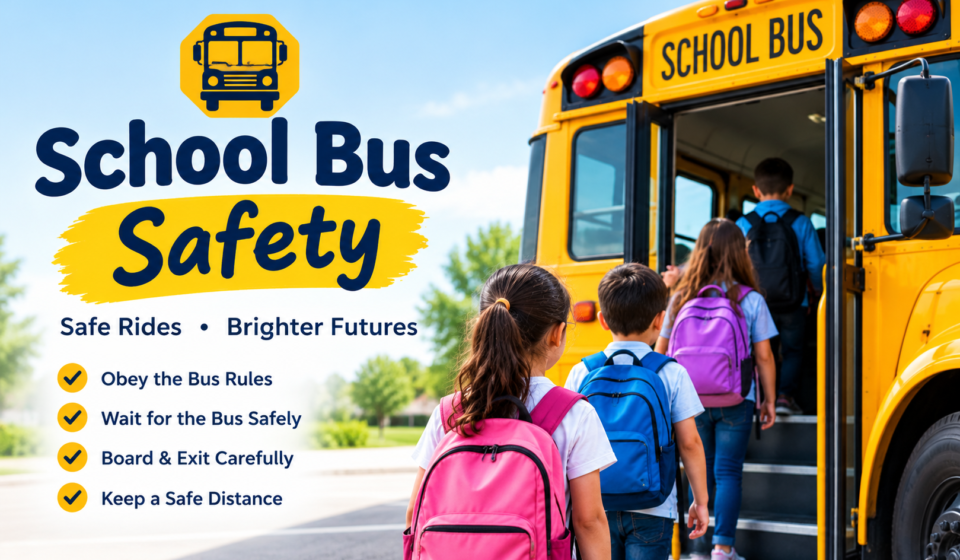

A school bus is an important part of daily life for millions of students. Every morning, children leave their homes, walk to a bus stop, and travel to school with other students. In the afternoon, the same bus takes them home. For many families, the school bus is not simply a way to get from one place to another. It is an important part of a child’s daily routine.
Because school buses carry children, safety must always be a top priority. A safe school bus system requires responsible drivers, well-maintained vehicles, clear rules, careful supervision, and cooperation from students, parents, schools, and other road users.
Understanding how school bus safety works can help everyone play a role in creating safer journeys.
Why School Bus Safety Matters
Children may not always understand the risks involved in traffic. They can become distracted, move quickly without looking, or forget basic safety rules. A school bus provides a controlled way for students to travel, but safety still depends on everyone’s behavior.
A safe journey begins before students even enter the bus. Children need to wait in a safe location, stay away from traffic, and remain calm while the bus approaches. They should never run toward a moving bus.
Once students are on board, they should remain seated, follow the driver’s instructions, and avoid behavior that could distract the driver.
These simple habits can make a significant difference.
The Role of a School Bus Driver
The school bus driver has a major responsibility. Driving a bus filled with children requires concentration, patience, and good judgment.
A professional driver must pay attention to traffic, road conditions, pedestrians, weather, and the behavior of students inside the vehicle. The driver also needs to follow school transportation policies and traffic laws.
Good communication is another important part of the job. When students understand the driver’s instructions, the journey can be more organized and predictable.
A responsible driver also knows that children can behave unexpectedly. A student may suddenly stand up, drop something, or become distracted. The driver must remain focused and avoid unnecessary distractions.
Students Should Follow Simple Bus Rules
School bus rules are designed to protect students.
Children should arrive at the bus stop on time and wait in a safe area. They should avoid pushing or playing near the road.
When the bus arrives, students should wait until it has stopped completely before approaching the entrance. They should enter calmly and find their assigned or available seat.
Inside the bus, students should keep aisles clear and avoid throwing objects. Loud behavior can make it difficult for the driver to concentrate.
Students should also remain seated while the bus is moving. Standing, changing seats, or leaning into the aisle can create unnecessary risks.
Following these rules does not require complicated effort. It simply requires attention and responsibility.
Staying Safe at the Bus Stop
The bus stop is an important part of school transportation safety.
Children should wait away from traffic and avoid standing too close to the edge of the road. Younger students may need an adult to supervise them while they wait.
Students should never chase a school bus if they arrive late. If the bus has already started moving, it is safer to wait for another approved transportation option rather than running after it.
Parents can help by teaching children what to do at the bus stop. Practicing the routine at home can make children more confident and careful.
Getting On and Off the School Bus
Getting on and off the bus requires special attention.
Students should wait until the bus has stopped before approaching the door. They should use handrails when available and avoid pushing other students.
After leaving the bus, students should move to a safe area rather than immediately walking behind the vehicle.
One important safety principle is to make sure the driver can see the child. Students should avoid crossing directly in front of the bus unless the driver has given them a clear signal and local safety procedures allow it.
Children should also avoid walking behind a school bus because the driver may have difficulty seeing them.
Why Seat Belts Can Matter
Some school buses are equipped with seat belts or other passenger restraint systems. When a seat belt is provided and required, students should use it correctly.
A seat belt can help keep a passenger in a safer position during sudden braking or a crash.
Parents should teach children that wearing a seat belt is not something to do only when an adult is watching. It should become a normal part of every journey.
Transportation providers should also make sure safety equipment is inspected regularly and maintained properly.
Keeping the School Bus in Good Condition
A school bus needs regular maintenance to remain safe.
Important systems such as brakes, tires, lights, steering, doors, mirrors, and emergency equipment should be checked according to applicable requirements.
Regular inspections can help identify problems before they become serious.
Maintenance is especially important because school buses often operate on a fixed daily schedule. They may travel in different weather conditions and carry many passengers throughout the week.
A transportation department that takes maintenance seriously can reduce avoidable mechanical risks and improve reliability.
The Importance of Driver Training
A school bus driver needs more than basic driving skills.
Drivers who transport children need appropriate training and knowledge of school transportation procedures. They should understand how to handle emergency situations, difficult weather, student behavior, and unexpected road conditions.
Training should not stop after a driver receives a license or qualification. Regular education can help drivers stay familiar with safety procedures and respond effectively to changing conditions.
Experienced drivers can also share practical knowledge with newer drivers, helping create a stronger safety culture.
How Parents Can Teach Better Safety Habits
Parents have an important role in school bus safety.
Children learn many behaviors from the adults around them. When parents consistently explain and demonstrate safe habits, children are more likely to follow those habits themselves.
Parents can teach children to wait calmly, stay away from traffic, use handrails, remain seated, keep their belongings secure, and listen to the driver.
It can also help to explain why these rules exist.
When children understand the reason behind a rule, they may be more likely to follow it instead of simply seeing it as a restriction.
The Responsibility of Other Drivers
School bus safety is not only the responsibility of people inside the bus.
Other drivers on the road must also behave carefully around school buses. When a school bus stops to load or unload students, drivers need to follow applicable traffic laws and pay close attention to children near the roadway.
Drivers should never become impatient around a stopped school bus.
A child may suddenly appear near the road, and traffic conditions can change quickly. Slowing down and remaining alert can help protect students.
Driving carefully around school buses is a responsibility shared by the entire community.
Technology Is Changing School Transportation
Technology is becoming an increasingly useful part of school transportation.
Modern school buses may use cameras, GPS tracking, communication systems, digital route management, and other technologies designed to improve operations.
Cameras can help transportation departments understand what happens inside and around a vehicle. GPS systems can help schools and transportation teams monitor routes and improve communication.
Some modern systems can also provide parents or schools with information about bus locations and delays.
Technology cannot replace responsible people, but it can provide useful tools that support safer and more efficient transportation.
School Bus Safety During Bad Weather
Weather can create additional challenges for school buses.
Rain, snow, fog, ice, strong winds, and poor visibility can affect road conditions. Drivers may need to reduce speed and increase following distance when conditions become difficult.
Students should also understand that bad weather can make the area around a bus more dangerous. Wet or slippery surfaces can increase the chance of falls.
Schools and transportation departments need clear procedures for severe weather. In some situations, routes may need to be delayed or changed to protect students.
The priority should always be safety rather than maintaining a normal schedule at any cost.
Creating a Positive Bus Environment
Safety is easier when students feel responsible for their behavior.
A school bus should be a calm and respectful environment. Students should treat the driver and other passengers with respect.
Bullying, fighting, shouting, and throwing objects can create dangerous distractions.
Schools can help by teaching students that bus behavior is part of their responsibility as members of the school community.
A positive environment also makes the driver’s job easier. When students cooperate, the driver can focus more attention on the road.
Emergency Preparedness
Every school transportation system should have plans for emergencies.
Drivers should know what steps to take if a bus experiences a mechanical problem, becomes involved in a collision, encounters severe weather, or faces another unexpected situation.
Students should also know basic emergency procedures. Schools can use age-appropriate safety education and drills to help children understand what to do.
The goal is not to frighten students. Instead, preparation can help them remain calmer if something unexpected happens.
Building a Strong School Bus Safety Culture
The safest school bus systems are built through cooperation.
Drivers, students, parents, teachers, transportation staff, school administrators, and other road users all have a role.
When everyone takes safety seriously, small good habits can become part of everyday life.
A student who waits safely, a driver who remains focused, a parent who teaches proper behavior, and a motorist who slows down near a stopped bus are all contributing to the same goal.
That goal is simple: helping every student reach school and return home safely.
The Future of School Bus Transportation
School transportation will continue to change as technology, vehicle design, and community needs develop.
Electric school buses are becoming an area of growing interest because they can reduce tailpipe emissions and may provide quieter operation. New safety technologies may also improve visibility, communication, and vehicle monitoring.
However, technology alone will not determine the future of school bus safety.
Human responsibility will remain essential.
A modern bus can have advanced equipment, but students still need to follow rules, drivers still need to concentrate, and other road users still need to drive carefully.
Final Thoughts on School Bus Safety
A school bus plays an important role in helping children travel between home and school. For families, it provides a practical transportation solution. For schools, it is an important part of daily operations.
Safety should remain at the center of the entire system.
Students need to understand basic rules. Drivers need proper training and focus. Buses need regular inspections and maintenance. Parents need to teach safe habits. Other motorists need to respect school buses and watch carefully for children.
When these responsibilities come together, the school bus can provide a safer and more reliable journey for students every day.
The best school bus safety system is not based on one rule or one person. It is built through consistent care, responsible behavior, good preparation, and cooperation across the entire community.