
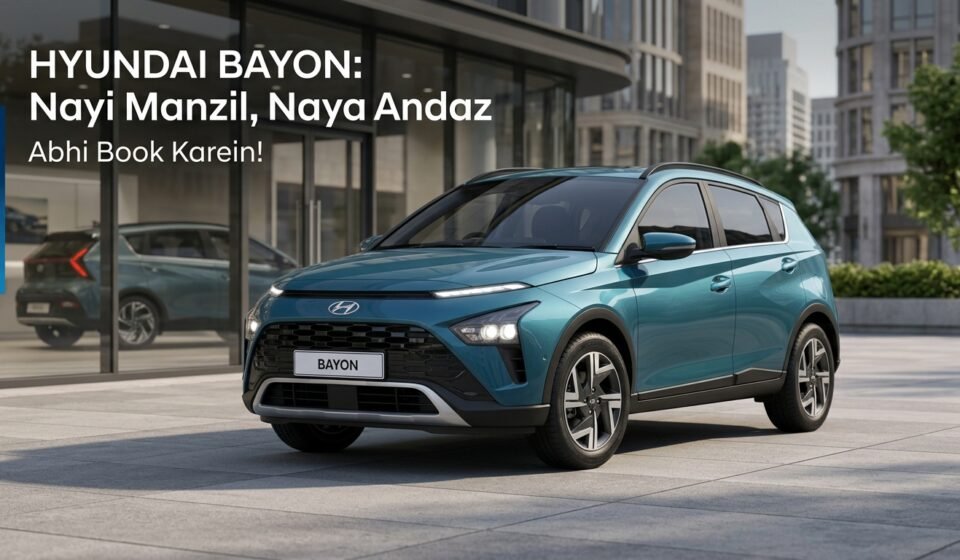

What Is the Hyundai BAYON?
The Hyundai BAYON is a compact SUV designed for drivers who want the raised driving position and practical shape of an SUV without moving into a larger vehicle class. Hyundai positions the BAYON within its European range, where its compact dimensions make it suitable for urban driving while still offering useful passenger and luggage space.
The BAYON measures around 4,180 mm long, 1,775 mm wide and 1,500 mm high, with a 2,580 mm wheelbase. Depending on the market and specification, it is offered with small petrol engines and manual or dual-clutch automatic transmission options.
Its combination of compact exterior dimensions, modern styling, technology and practical cargo space makes the BAYON an interesting option for people looking at small SUVs.
Why Is the Hyundai BAYON Popular?
One of the main attractions of the BAYON is its balance between city-friendly dimensions and SUV practicality.
A large SUV can be difficult to park and maneuver in busy urban areas. The BAYON is considerably easier to place on narrow streets and in smaller parking spaces while still providing a relatively high seating position.
The vehicle also offers five seats and a useful luggage compartment. Hyundai technical information lists up to 411 liters of luggage capacity with the seats in their normal configuration and up to 1,205 liters with the rear seats folded, depending on the specification and market.
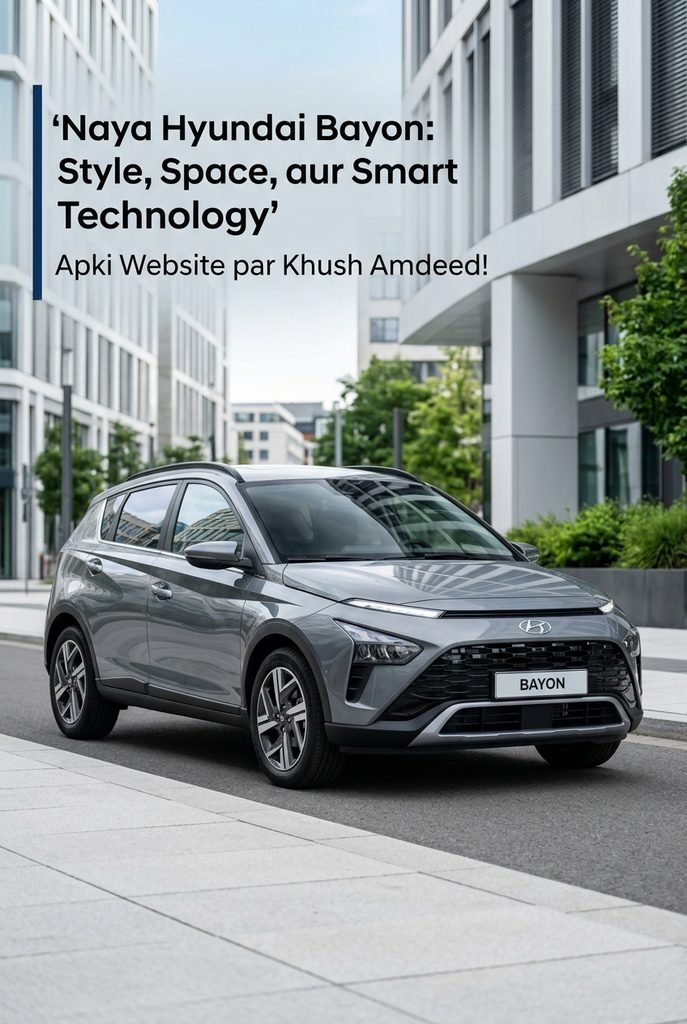
What Engine Does the Hyundai BAYON Have?
1.0 T-GDi Petrol Engine
One of the key engines available for the BAYON is Hyundai’s 1.0-liter T-GDi three-cylinder petrol engine.
Depending on the model year and market, the engine is available with different power outputs. Current Hyundai technical documentation for some markets lists a 90 PS version, while other market specifications list a 100 PS version.
The 90 PS version produces approximately 172 Nm of torque, while the 100 PS specification can produce up to 172 Nm with a manual transmission and higher torque figures with certain DCT configurations.
This engine is designed more around everyday efficiency and usability than outright performance. For commuting, city driving and normal highway journeys, the small turbocharged engine provides a practical balance.
Manual or Automatic Transmission
The Hyundai BAYON can be equipped with a six-speed manual transmission or, depending on market and engine specification, a seven-speed dual-clutch transmission.
The automatic version can be convenient for drivers who spend a lot of time in traffic, while the manual transmission gives drivers more direct control and can be paired with the lower-cost versions of the vehicle.
Availability varies between countries, so buyers should check the exact local specification before making a purchase.
How Fast Is the Hyundai BAYON?
Performance depends on the engine and transmission selected.
For example, Hyundai’s technical data for a 90 PS 1.0 T-GDi lists a 0–62 mph time of 11.9 seconds with the six-speed manual and 13.3 seconds with the seven-speed DCT. The listed top speeds are approximately 108 mph and 107 mph respectively.
Other versions of the BAYON with the 100 PS engine have different performance figures. Hyundai’s model-year specifications list a 0–100 km/h time of 11.3 seconds for the manual version and 12.4 seconds for the DCT version.
These figures show that the BAYON is primarily designed as an efficient compact SUV rather than a performance-focused vehicle.
What Are the Hyundai BAYON Dimensions?
The compact dimensions are an important part of the BAYON’s appeal.
| Specification | Hyundai BAYON |
|---|---|
| Length | 4,180 mm |
| Width | 1,775 mm |
| Height | 1,500 mm |
| Wheelbase | 2,580 mm |
| Fuel tank | 40 liters |
| Seating capacity | 5 |
| Boot capacity | Up to 411 liters |
| Maximum luggage capacity | Up to 1,205 liters |
These figures are based on Hyundai technical documents and can vary slightly depending on model year, market and configuration.
Is the Hyundai BAYON Good for City Driving?
Compact Size Makes Parking Easier
The BAYON’s relatively short body makes it well suited to urban environments. Its approximately 4.18-meter length gives drivers a useful compromise between interior practicality and easy maneuverability.
Hyundai technical information lists a turning circle of about 10.4 meters for certain versions.
That can be useful when navigating tight streets, parking areas and busy urban roads.
Raised SUV Driving Position
Another advantage is the elevated SUV-style driving position. Some drivers prefer this because it provides a different view of surrounding traffic compared with a traditional hatchback.
The BAYON therefore sits between the familiar driving experience of a small car and the visual presence of a compact SUV.
What Is the Hyundai BAYON Boot Space?
Boot space is one of the vehicle’s practical strengths.
Depending on the specification, Hyundai lists around 411 liters of luggage capacity with all five seats available. Folding the rear seats can increase the maximum cargo volume to approximately 1,205 liters.
This gives the BAYON enough flexibility for everyday shopping, luggage, work equipment and other regular cargo.
For a compact SUV, the ability to switch between passenger seating and additional luggage capacity can be particularly useful.
What Is the Hyundai BAYON Interior Like?
The BAYON’s interior is designed around everyday usability rather than luxury-car levels of space.
The five-seat layout makes it suitable for families and small groups, while the compact exterior keeps the vehicle manageable in cities.
Depending on the trim level and market, buyers may find features such as touchscreen infotainment, smartphone connectivity, digital displays and other driver-focused technology.
Exact equipment varies considerably by country and trim, so it is important to check the specification of the particular BAYON being considered.
What Technology Does the Hyundai BAYON Offer?
Technology is an important part of the modern BAYON package.
Depending on the market and trim, equipment can include infotainment and navigation systems, smartphone connectivity, digital instrument displays and driver-assistance technology.
Hyundai also continues to provide software and navigation updates for the BAYON. Hyundai’s European update system currently lists BAYON software and map updates dated July 2026.
This is useful because connected vehicle technology can remain relevant longer when software and navigation systems receive updates.
What Safety Features Does the Hyundai BAYON Have?
Safety equipment depends on the market, model year and trim level.
Modern BAYON versions can be equipped with various driver-assistance systems intended to help the driver monitor the road and respond to potential hazards. Depending on specification, these may include features associated with lane assistance, collision avoidance, driver monitoring and parking assistance.
Because safety equipment can differ between markets, buyers should check the exact equipment list supplied by their local Hyundai dealer rather than assuming every feature is standard on every BAYON.
Is the Hyundai BAYON Fuel Efficient?
Fuel consumption depends on engine, transmission, wheels, driving conditions and the testing specification used for the particular market.
For example, Hyundai’s technical data for one 100 PS BAYON specification lists combined consumption of approximately 5.6 liters per 100 km under the stated test procedure.
Another current technical sheet for a 90 PS version gives WLTP combined figures in a range of roughly 5.7–6.1 liters per 100 km, depending on transmission and configuration.
Real-world fuel consumption can be different from official laboratory figures. Traffic, weather, driving style, vehicle load and road conditions all influence actual fuel use.
How Much Cargo Can the Hyundai BAYON Carry?
The BAYON is designed to provide useful cargo flexibility despite its compact footprint.
With five seats in use, the listed boot capacity is around 411 liters in relevant Hyundai specifications. With the rear seats folded, maximum capacity can reach about 1,205 liters.
The vehicle also has a listed maximum roof load of 70 kg and a braked towing capacity of up to 910 kg in certain specifications.
Towing figures should always be checked against the exact local version and registration documents.
What Makes the Hyundai BAYON Different From a Larger SUV?
The biggest difference is size.
A larger SUV can provide more cabin space, stronger engines and greater overall road presence, but it can also be more expensive to run and less convenient in tight urban environments.
The BAYON takes a smaller approach. It aims to provide useful SUV characteristics while retaining dimensions closer to a small passenger car.
This makes it particularly relevant to drivers who want:
- A compact SUV body
- Five-seat practicality
- A raised driving position
- Manageable city dimensions
- Useful luggage capacity
- Small petrol-engine options
- Manual or automatic transmission availability, depending on market
Is the Hyundai BAYON a Good Family Car?
The BAYON can work well for a small family that prioritizes compact dimensions and everyday practicality.
Five seats and a 411-liter luggage compartment provide a useful starting point for daily family needs. The ability to expand cargo capacity to around 1,205 liters when the rear seats are folded adds further flexibility.
However, families who regularly need substantial rear-seat space or large amounts of luggage may prefer a larger SUV.
What Should You Check Before Buying a Hyundai BAYON?
Before buying a BAYON, it is worth checking the exact local specification rather than relying on general online specifications.
Important things to compare include:
Engine and Transmission
Check whether the vehicle has the 90 PS or 100 PS engine, and whether it uses the manual or DCT transmission.
Trim and Equipment
Features can change significantly between trim levels. Check infotainment, safety systems, parking equipment, interior features and wheel sizes.
Fuel Consumption
Look at the official WLTP figure for the exact vehicle, but remember that real-world consumption can differ.
Warranty and Service
Warranty terms and service schedules vary by country, so confirm them with the local Hyundai distributor.
Price
The Hyundai BAYON price is not universal. Taxes, trim levels, promotions, engine options and market-specific equipment can produce substantial differences between countries.
Frequently Asked Questions About Hyundai BAYON
Is the Hyundai BAYON a good car?
The Hyundai BAYON is designed as a practical compact SUV, combining relatively small exterior dimensions with five seats and useful luggage capacity. Whether it suits a particular driver depends on priorities such as space, engine performance, equipment, price and intended use.
What engine does the Hyundai BAYON use?
The BAYON is offered with small petrol engines, including 1.0-liter T-GDi three-cylinder versions. Exact power and transmission choices vary by model year and market. Hyundai documentation lists both 90 PS and 100 PS 1.0 T-GDi specifications.
How much boot space does the Hyundai BAYON have?
Relevant Hyundai specifications list approximately 411 liters of luggage space with the rear seats in place and up to 1,205 liters with the rear seats folded.
Is the Hyundai BAYON automatic?
Yes, automatic versions are available in some markets. Hyundai technical specifications list a seven-speed dual-clutch transmission for certain 1.0 T-GDi versions. Availability depends on the country and trim.
How big is the Hyundai BAYON?
The BAYON is approximately 4,180 mm long, 1,775 mm wide and 1,500 mm high, with a 2,580 mm wheelbase. Exact measurements and equipment can vary by specification.
Is the Hyundai BAYON good for city driving?
Its compact dimensions, small-engine options and SUV-style seating position make it suitable for many urban driving situations. The exact experience depends on traffic, road conditions, transmission choice and driver preference.
Conclusion
The Hyundai BAYON is a compact SUV built around practicality, manageable dimensions and everyday usability. Its approximately 4.18-meter length keeps it relatively easy to handle in urban environments, while five seats and up to around 1,205 liters of maximum cargo capacity give it useful flexibility.
Its 1.0-liter T-GDi engine options provide a focus on everyday driving and efficiency rather than high performance. Manual and seven-speed DCT versions are available in selected markets, while technology and safety equipment vary according to trim and country.
For readers researching the BAYON, the most important step is to compare the exact local model, engine, trim, equipment, price and warranty rather than relying on specifications from another country.
Suggested Internal Link Opportunities
If this article is being published on an automotive website, natural internal links could point to:
- Hyundai SUV Models — for readers comparing Hyundai’s SUV range
- Hyundai KONA vs BAYON — for readers comparing two compact Hyundai SUVs
- Hyundai Car Maintenance Guide — for owners researching servicing
- Best Compact SUVs — for readers comparing vehicles from different manufacturers
- Hyundai Fuel Economy Guide — for readers researching running costs