

What Is the Threads Movie?
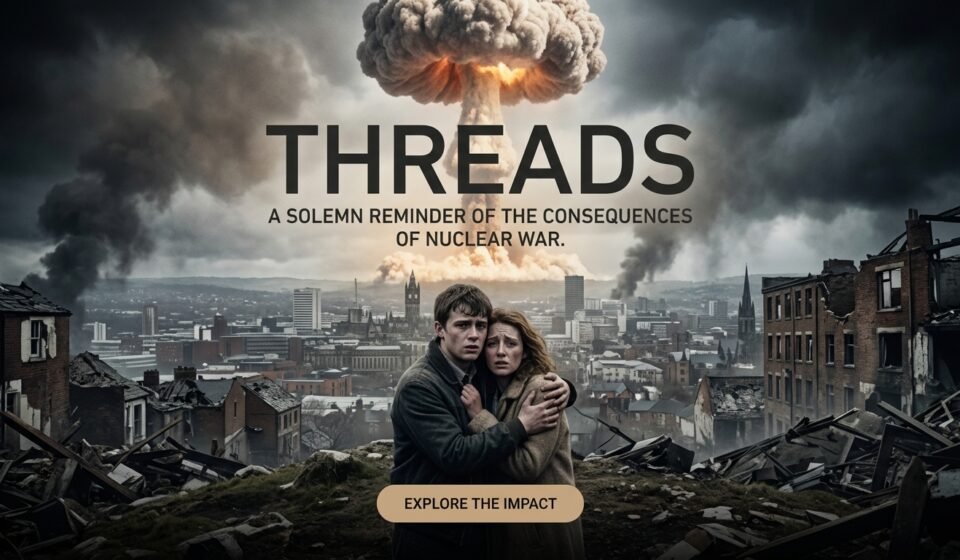
The Threads movie is a 1984 British television drama that imagines what could happen to ordinary people after a nuclear war. Directed and produced by Mick Jackson and written by Barry Hines, the film focuses on Sheffield, England, and follows civilians as an international crisis develops into a nuclear exchange. It originally aired on BBC Two on September 23, 1984.
Unlike many war films that concentrate on soldiers, politicians, or military strategy, Threads follows ordinary families. This approach makes the story feel personal rather than like a conventional action movie. The film examines how a nuclear attack could affect homes, families, government services, food supplies, health, communication, and society itself.
The result is a bleak but carefully constructed drama about the long-term consequences of nuclear conflict.
When Was Threads Released?
The Threads movie was first broadcast in the United Kingdom on September 23, 1984. It was produced during a period of intense Cold War tension between the United States and Soviet Union.
The film was made as a television production rather than a traditional theatrical movie. Its approximate running time is around 112 minutes, although some modern listings give a slightly longer duration depending on the version.
Its television format did not prevent it from becoming an influential work. Over the years, Threads has been discussed as one of the most disturbing and realistic fictional portrayals of nuclear war.
What Is the Threads Movie About?
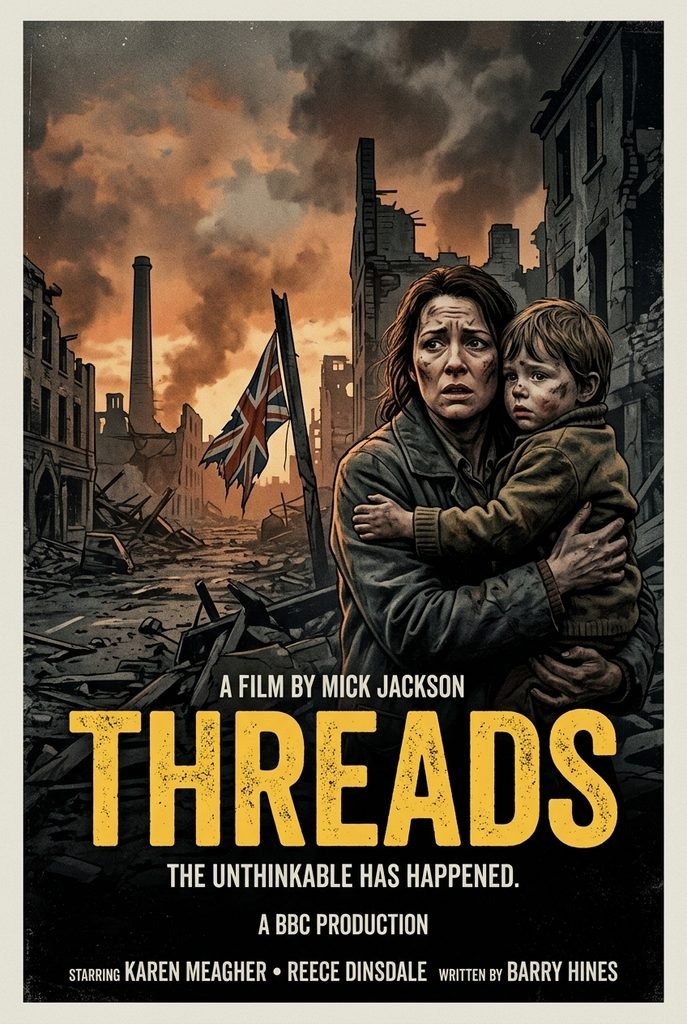
The story begins in Sheffield, where young couple Ruth Beckett and Jimmy Kemp are dealing with an unexpected pregnancy and plans for their future. Their personal concerns initially seem completely separate from international politics.
Meanwhile, tensions between the United States and Soviet Union continue to increase. News reports describe an escalating international crisis, while people in Britain begin preparing for the possibility of war.
As the situation deteriorates, the film gradually moves from everyday life to national emergency.
Eventually, nuclear weapons are used. Sheffield is caught in the resulting destruction, and the story shifts from the anticipation of war to the struggle for survival.
The film then explores what happens after the initial attack. The consequences do not disappear when the explosions end. Instead, the population faces injuries, radiation, food shortages, social breakdown, damaged infrastructure, and a drastically changed environment.
Who Are the Main Characters in Threads?
The story primarily follows Ruth and Jimmy and the people around them.
Ruth Beckett
Ruth, played by Karen Meagher, is one of the central characters. Her relationship with Jimmy and her pregnancy provide an important personal storyline before and after the nuclear attack.
Her experiences help the audience understand the human consequences of the disaster rather than viewing the war only through statistics or political events.
Jimmy Kemp
Reece Dinsdale plays Jimmy Kemp. He is Ruth’s partner and is initially focused on building a normal future with her.
The contrast between Jimmy’s ordinary ambitions and the catastrophic events surrounding him is an important part of the film’s storytelling.
Jimmy’s Family
Jimmy’s family represents another group of ordinary people attempting to survive the attack. Their experiences demonstrate how quickly normal family life can disappear when essential services and infrastructure collapse.
How Does Nuclear War Begin in Threads?
One of the most effective aspects of the Threads movie is that the nuclear conflict develops gradually.
The audience sees news reports and political developments before the actual attack. The characters continue their everyday activities even as the international situation becomes increasingly dangerous.
The film’s fictional crisis involves conflict connected to Iran and growing confrontation between the United States and Soviet Union. Eventually, the situation escalates into a nuclear exchange involving NATO and the Warsaw Pact.
This buildup makes the attack feel less like a sudden plot device and more like the frightening culmination of a developing international crisis.
What Happens to Sheffield in Threads?
Sheffield becomes one of the central locations of the nuclear attack.
The city is portrayed as a working-class industrial community, making the destruction particularly significant. The film shows how a nuclear strike affects not only buildings and people but also the systems that allow a modern city to function.
Communication, transportation, government administration, medical care, food distribution, and other essential services are severely disrupted.
The film then goes beyond the immediate destruction. Survivors have to deal with an environment in which many of the systems they previously depended on no longer work.
BFI notes that Threads deliberately concentrates on ordinary people rather than taking the government or military perspective commonly used by other nuclear-war films.
What Makes Threads Different From Other Nuclear War Movies?
It Focuses on Ordinary People
Many war stories center on military leaders or soldiers. Threads takes a different approach.
The audience follows civilians who have little control over the international events unfolding around them. This makes the consequences feel closer to everyday life.
It Shows the Long-Term Consequences
Another important feature is the film’s attention to what happens after the attack.
The story does not simply end after the bombs explode. It explores the continuing consequences of radiation, hunger, disease, social disruption, and environmental changes.
It Uses a Documentary-Like Style
The movie combines dramatic storytelling with narration, news-style information, and an observational visual approach.
This documentary-like presentation contributes to its realism. BFI describes the film as a documentary-style drama that gradually moves from normal everyday life toward nuclear catastrophe.
What Is the Ending of Threads About?
Spoiler warning: This section discusses the ending.
The ending of Threads emphasizes the continuing deterioration of society rather than providing a traditional resolution.
Years after the nuclear attack, Britain has been transformed. The surviving population faces an extremely difficult existence, and many of the institutions and technologies associated with modern life have disappeared or become severely limited.
Ruth’s daughter eventually becomes part of this devastated future. The final portion of the story reinforces one of the film’s central ideas: the consequences of nuclear war could continue across generations.
Rather than giving viewers a comforting conclusion, Threads ends by emphasizing the loss of normality and the uncertain future of those who remain.
Why Is the Threads Movie Considered So Disturbing?
The Threads movie is disturbing largely because it avoids presenting nuclear war as an exciting spectacle.
There are no conventional heroes who can stop the disaster. There is no simple solution. Ordinary people cannot control the decisions made by governments and military leaders.
The film also spends significant time showing the consequences after the initial attack. This makes the disaster feel prolonged rather than temporary.
The BFI’s retrospective on the film notes that Threads was remembered for its harrowing realism and its depiction of the aftermath of nuclear attack on Sheffield.
What Themes Does Threads Explore?
The Fragility of Modern Society
Modern cities depend on complex systems. Electricity, transportation, healthcare, communications, agriculture, and government all rely on infrastructure.
Threads explores what happens when those systems suddenly stop functioning.
Family and Survival
The film’s personal stories show how families attempt to survive in circumstances that are almost impossible to control.
Nuclear Deterrence and Fear
Although the movie is fictional, it was created during the Cold War and reflects the widespread anxiety surrounding the possibility of nuclear conflict.
Generational Consequences
One of the strongest ideas in the film is that a catastrophic war would not necessarily affect only the people alive when it occurred. Its consequences could extend to future generations.
Who Directed and Wrote Threads?
Mick Jackson directed and produced the film, while British writer Barry Hines wrote the screenplay. Karen Meagher and Reece Dinsdale lead the cast as Ruth and Jimmy.
Jackson later became known for directing films including The Bodyguard, while Hines was also known for his work on Kes.
The combination of Hines’ writing and Jackson’s direction helped create a story that balances personal drama with a broader examination of social collapse.
Did Threads Win Any Awards?
Yes. The film received significant recognition after its release.
According to available records, Threads received seven BAFTA nominations in 1985 and won four awards, including Best Single Drama. It also received awards for areas including design, cinematography, and editing.
Its continued screenings and restorations demonstrate that the film has remained culturally significant decades after its original broadcast.
Where Can You Watch the Threads Movie?
Availability depends on your country and the current licensing arrangements.
The film has been released through different broadcasters, digital services, and home-video distributors over the years. Current listings include Apple TV and Microsoft, while the BBC has also featured the film in its programming and archive material.
Because streaming rights can change, viewers should check the official listing for their country before looking for the movie.
Is Threads Based on a True Story?
No. Threads is not based on a specific true story.
It is a fictional drama created to explore the possible consequences of nuclear war. However, its depiction draws on real-world concerns about nuclear weapons, civil defence, international tensions, and the potential effects of a large-scale nuclear conflict.
Its fictional characters and events are therefore used to illustrate possible consequences rather than document an actual historical attack.
Is Threads a Horror Movie?
Threads is generally classified as a drama, war film, dystopian film, or television docudrama rather than a conventional horror movie.
However, its subject matter and presentation can make it feel similar to horror. The frightening elements come from realistic depictions of destruction, suffering, societal collapse, and the loss of normal life rather than supernatural creatures or traditional horror conventions.
FAQS
What year was the Threads movie released?
The Threads movie was first broadcast in 1984, with its UK premiere taking place on September 23, 1984.
What is Threads about?
Threads is about ordinary people in Sheffield and the consequences they face when an escalating international conflict develops into nuclear war. The film focuses particularly on the effects of the attack and its long-term aftermath.
Who stars in Threads?
Karen Meagher plays Ruth Beckett, while Reece Dinsdale plays Jimmy Kemp. Other cast members include Rita May, David Brierly, Nicholas Lane, Jane Hazlegrove, and Sylvia Stoker.
Who directed the Threads movie?
Mick Jackson directed and produced Threads. The screenplay was written by Barry Hines.
Where does Threads take place?
The main story takes place in Sheffield, England. The city becomes the focus of the film’s depiction of nuclear attack and its aftermath.
Is Threads worth watching?
Whether someone wants to watch it depends on their interest in serious historical television drama and difficult subject matter. It is a particularly intense film, so viewers should be aware that it contains disturbing depictions of war, injury, death, and social collapse.
Internal Link Opportunities
If this article is published on an entertainment or movie website, natural internal links could include:
- Best 1980s Movies — link from the release-year discussion.
- Nuclear War Movies — link from the section about the film’s themes.
- British TV Movies — link from the section explaining its BBC origins.
- Dystopian Movies Explained — link from the discussion of the film’s post-war society.
- The Day After Movie — link when discussing other Cold War nuclear-war dramas.
Conclusion
The Threads movie remains a remarkable example of serious television filmmaking. Released by the BBC in 1984, it follows ordinary people in Sheffield as an international crisis develops into nuclear war and then examines the consequences long after the initial attack.
Its strength comes from its focus on everyday people, its documentary-style presentation, and its attention to the long-term effects of catastrophe. Rather than treating nuclear war as an action spectacle, Threads asks what happens to families, communities, infrastructure, and future generations when modern society is suddenly pushed beyond its limits.
More than four decades after its original broadcast, the film continues to be discussed because its central subject remains relevant: the potentially far-reaching human consequences of nuclear conflict.